
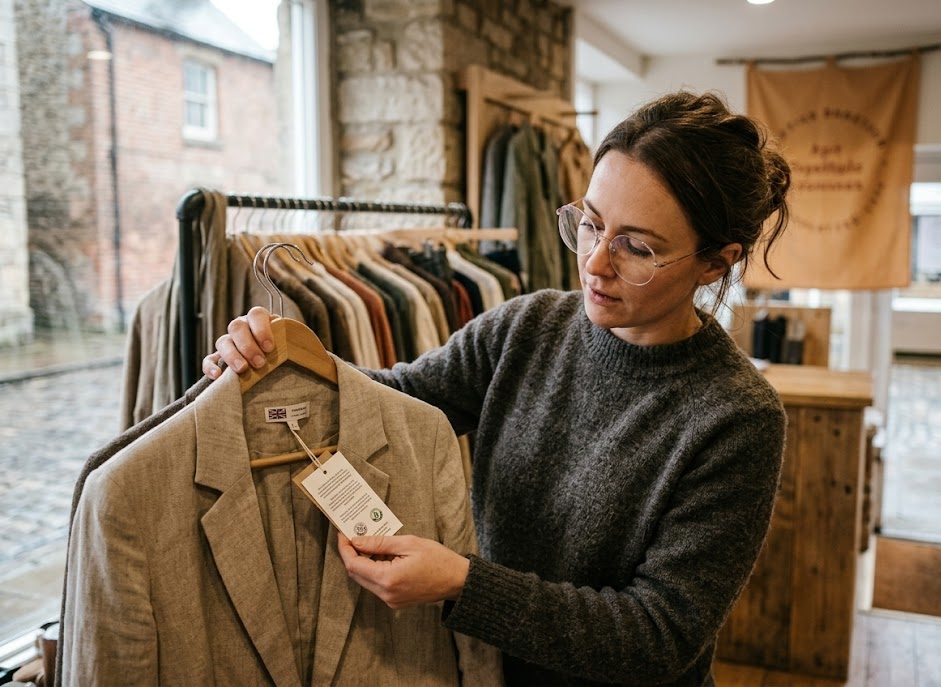
Is Your Fashion Brand Ethically Sound? Here’s How You Can Find Out
-You see a label that says ‘sustainable’ and feel a bit better about buying the material. However, a closer look reveals no factory names, no details about the fabric, and no proof of claims. Does this sound familiar?
Many British shoppers experience this every week. The word ‘ethical’ is often used on tags without any clear meaning.
According to WRAP, UK households throw away 711,000 tonnes of used textiles each year. This figure illustrates how often people buy clothes, wear them for a short time, and then discard them.
Identifying actual ethical fashion brands matters because your money shapes what gets made next.
This guide provides simple checks to perform before you buy and help you feel more in control when you pay at the register.
Practical Steps to Evaluate Your Favourite Stores
Here are some practical steps to examine your clothing choices:
Step 1: Start with Brand Transparency
Visit the brand’s website and go to the About or Sustainability page. Honest firms share the names of their factories, the countries where their products are made, and details about their supply chains. Some also provide annual impact reports.
Be cautious of unclear statements such as “we care about the planet” that lack specific evidence. This is a warning sign. True transparency includes clear details like names, locations, and dates.
Use this quick brand ethical transparency checklist when browsing.
- Does the site list where garments are made?
- Does it name suppliers?
- Are there third-party audits or certifications shown?
If you find none of this information, be cautious about the claims.
Step 2: Check the Materials Carefully
Fabric tells most of the story about clothing.
A 2024 Ethical Consumer report found that the textile industry accounts for 15% of all synthetic microplastics, making it the third largest user after construction and packaging. This shows the importance of choosing natural or recycled fibres for ethical shopping.
When shopping, feel the cloth. High-quality materials:
- Feel strong
- Have a good weight
- Feature a clean weave
If the fabric is thin and slippery, like polyester, it might be lower quality.
Organic cotton uses much less water and avoids harmful pesticides. Linen, hemp, and Tencel last well over time. Recycled polyester helps reduce waste, but it can still release microfibres during washing.
Stay away from fabric blends with unclear percentages. A label that says “100% organic cotton, GOTS certified” offers more useful information than “eco-friendly fabric blend.”
Fabric Sustainability Checker
Select a material below to view its environmental impact and sustainability rating (Scale 1–5).
Step 3: Look Into Labour Practices
Each garment is made by a person who sews it. Important certifications include:
These certifications focus on wages, working hours, and safety.
When clothes are made in Britain, Portugal, and other parts of Europe, they frequently comply with stricter labour laws. However, just being in these areas does not guarantee fair treatment.
Check what the brand says about wages. A claim of “living wage” with specific partners is more credible than just saying “fair conditions.”
If a brand doesn’t share details about who makes their clothes, that silence is telling.
Step 4: Think About Product Lifespan
A jumper worn 200 times is better than one worn 5 times, even if the second one costs less. Durability is key when shopping ethically.
Check the stitching at the seams. Pull on the hem. Quality pieces keep their shape, resist pilling, and last through many washes. Buttons should feel secure, zippers should move smoothly, and linings should lie flat.
Well-made pieces become favourites in your wardrobe. They smell like fresh laundry on a Sunday morning, not like factory chemicals.
Step 5: Weigh Price Against Real Value
A £6 t-shirt usually doesn’t cover the full costs of cotton, dye, labour, shipping, and a fair profit. Someone, somewhere, pays the extra amount. Often, that person is the worker who made it.
Higher prices don’t always mean better ethics. Many luxury brands use the same supply chains as fast fashion. Look beyond the price tag and check the facts. Cost per wear is more important than the initial price.
For a more precise view of the stretch value from each purchase, take a look at this cost-per-wear calculation guide to determine the quality of clothing.
Step 6: Run These Quick Buying Checks
Before making a purchase, use these quick filters to check if the brand's claims are true:
- Search online for the brand name along with “factory” or “supply chain.”
- Read reviews on independent websites, not just the brand’s own page.
- Check for certifications like GOTS, B Corp, or Fairtrade.
- Look at the return policy, since brands confident in quality mostly offer generous returns.
These checks will take about five minutes but are well worth your time and money.
Conclusion
Shopping ethically means making better decisions, not being perfect. It’s about asking the right questions and making smarter choices each time. One thoughtful purchase has a bigger impact on the fashion industry than a closet full of regrets.
If you want to build a wardrobe that reflects your values as well as your style, explore Clotho London’s approach to thoughtful fashion and long-lasting wardrobe choices.

