
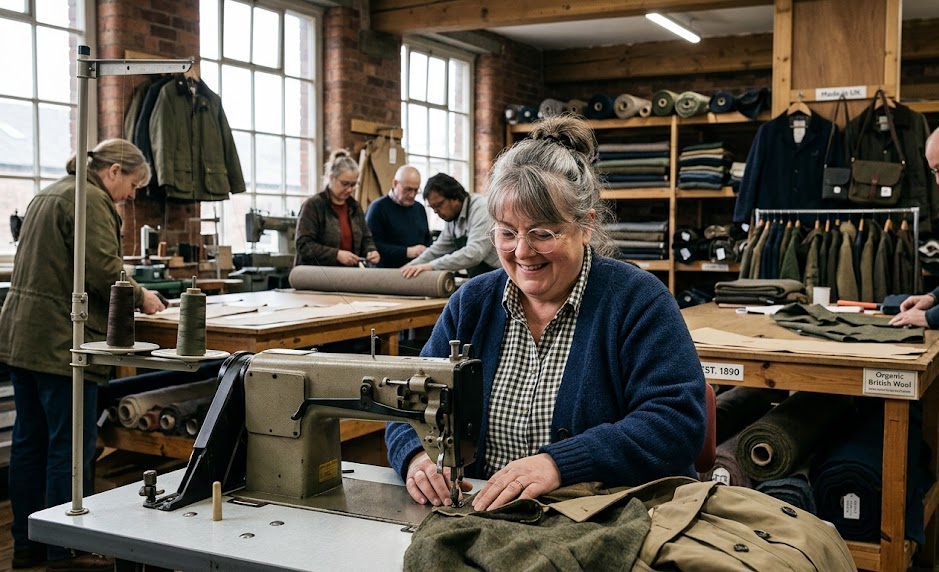
5 British Heritage Brands Prioritising Ethical Production
-True heritage means more than just lasting through the years; it also requires growth, honesty, and integrity. Some old British brands depend only on their past reputations.
At the same time, smart companies have changed how they work. They now prioritise repairing, tracing, and sourcing with genuine care, showing that being long-lasting and responsible go hand in hand.
At Clotho London, we help you find timeless, sustainable fashion brands; where classic meets contemporary style. In this guide, we name five British heritage fashion brands that pair a longer history with honest and modern ethics. You get the trusted heritage and the expected standards today.
British Ethical Clothing Brands With Real Heritage
Here are the five British ethical clothing brands with real heritage that you need to know:
Sunspel
Sunspel has made high-quality cotton clothing since 1860. Its factory in Long Eaton has been in the same red brick building since 1937. Every classic T-shirt is still cut and sewn by hand there. That alone sets it apart from most ethical clothing brands.
The important detail is sourcing. Sunspel makes a British wool jumper from Bluefaced Leicester fleece, which is raised, spun, and knitted within 150 miles of the factory. The wastewater is cleaned on-site and reused. The wool grease is turned into cosmetics. When you pick up one of its super-soft tees, you notice the difference in the weave.
Barbour
Barbour began in South Shields in 1894, making oilskins for sailors. Today, its waxed jackets are popular for countryside wear. The brand focuses on actions rather than slogans.
Its Wax for Life programme covers re-waxing, repairs, and an upcycling line known as Re-Loved. In fact, more than 70,000 wax garments come back each year to be mended, rewaxed, or altered, all from the same South Shields factory. A damaged Bedale jacket returns looking ready for another decade. The smell of fresh wax on cotton is part of the process.
Tricker’s
Tricker’s has been making handmade shoes in Northampton since 1829. It is the oldest Goodyear welted shoemaker in England. This type of construction is very important.
A Goodyear welt stitches the upper part of the shoe, the welt, and the sole together instead of using glue. A skilled maker can take the shoe apart and put a new sole on, so a good pair lasts through many repairs, often for decades.
The Bourton brogue and the Stow boot are made from full-grain leather that ages well. Buy once, repair often, and the cost per wear decreases each year.
Johnstons of Elgin
Johnstons of Elgin has been making wool and cashmere since 1797. Their Elgin factory is one of the few remaining vertical mills in Scotland. The team dyes, spins, weaves, and finishes everything on site.
By managing the entire process, they have better control over quality and ethics. The brand helped found the Sustainable Fibre Alliance, which supports cashmere herders and grassland health in Mongolia. Their scarves and knitwear are made from natural, renewable fibres designed to last a long time.
The soft feel of a cashmere scarf is why these items are often passed down through families.
Community Clothing
Heritage does not have to cost a lot. Patrick Grant started Community Clothing 10 years ago to help build British textile towns. The brand itself is what heritage aims to protect.
Community Clothing works with over 50 UK factories in the Northwest, Yorkshire, and other areas. They produce fewer seasonal collections and use less marketing, keeping prices around a third of those of high-end brands.
According to John Lewis, about 90% of their fabric is made in the UK. The outcome is well-made, everyday clothing that supports skilled jobs at home. This shows that ethical production can be affordable for most people.
How to Judge a Heritage Brand Yourself
Here’s how you can judge a heritage brand for its ethical standing all by yourself:
- Check the source of their materials, work and repair policies.
- Ask where each item is made and if the brand shares its factory names.
- Check the materials, as natural fibres like wool and full-grain leather usually last longer.
- Look for services that repair or resole items; this shows the brand thinks about the long term.
- Compare the price with how long the item is likely to last.
Why is this important? The average garment in the UK lasts about 2.2 years. Choosing quality can extend that time. Making clothes last nine months longer can reduce their carbon, water, and waste impact by up to 20%.
Conclusion
Heritage brands demonstrate their value by acting responsibly in line with their history. Buying fewer, high-quality items boosts your personal style and helps the environment.
Choose brands that are open about repairs, carefully source their materials, and make durable products. This approach creates a wardrobe that gains value over time. By making a higher initial investment, you can avoid future waste.
Want help building a timeless wardrobe? Get in touch with us at Clotho London.

