
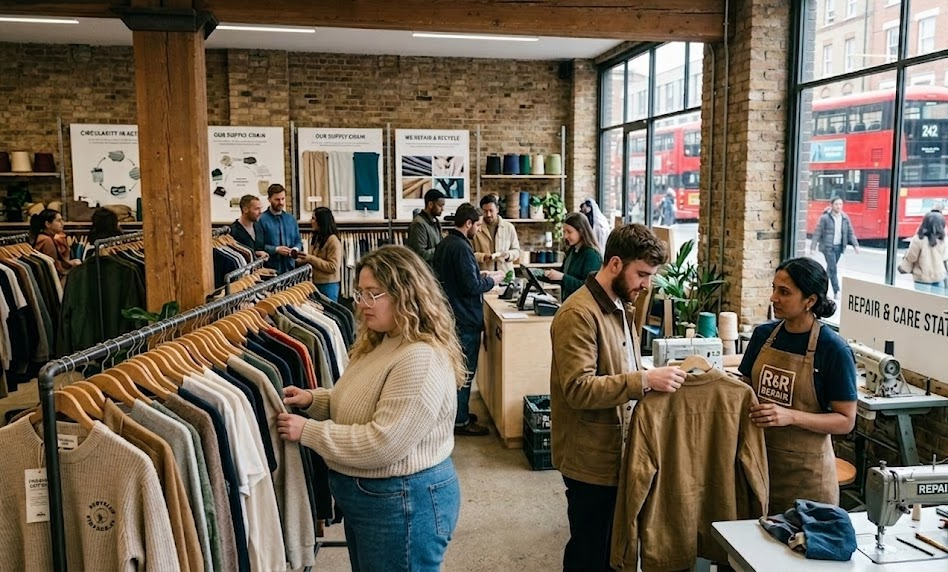
The State of Sustainable Fashion in the UK for 2026: A Comprehensive Report
-A WRAP report found that UK brands rose by 17% in 2024 as compared to 2019, while total carbon emissions increased by 10% over the same period. Vinted now has over 17 million British users, closely following Primark and Next in customer reach.
This contrast defines the current state of sustainable fashion concerns consumers face daily in the UK. Old habits are loud, but new ones are growing fast.
At Clotho London, we help you find timeless, sustainable fashion brands; where classic meets contemporary style. In this report we gather crucial data, brand changes, and policy updates influencing 2026. These shifts directly connect to your wardrobe, as data only offers value when it helps you choose what to buy.
Sustainable Fashion Market Trends
The second-hand market is no longer just for a few people; it has become popular. Sites like Vinted, Depop, and eBay now operate alongside regular stores. Charity shops have improved their choices. Younger shoppers are choosing second-hand garments before buying new ones.
Rental services for special occasion wear are becoming more common, with platforms such as Hurr and By Rotation attracting many repeat users. It’s now standard for brand websites to include resale options.
These sustainable fashion market trends point to a real shift in how people see clothes. Clothes are starting to feel like valuable items instead of things you easily throw away.
Transparency in UK Sustainable Fashion
Brands are getting better. Many share their supplier lists and report on their emissions. Circular collections from companies like John Lewis, Finisterre, and Patagonia UK show this positive trend.
However, greenwashing is still an issue. The Competition and Markets Authority (CMA) is working to tackle vague claims through the Green Claims Code. Using plain language helps build trust, while flashy slogans do not.
Materials and Circular Innovation
Recycled fibres are moving from launch capsules into core ranges. Bio-based leathers made from cactus and mushrooms are starting to appear in stores. Recycling wool and cotton is progressing slowly, and maintaining quality for closed-loop systems remains a challenge.
According to the Ellen MacArthur Foundation, less than 16% of clothing materials are recycled into new garments. This inefficiency results in over $100 billion in lost material value every year. Repair services from brands such as Finisterre and Tom Cridland help clothes last longer.
UK Policy and Regulations
Digital Product Passports for clothing and shoes will soon launch due to new EU rules that affect UK supply chains. Brands that sell in both markets are setting up systems to track their products.
The UK Government is taking stronger action against greenwashing through the CMA Green Claims Code.
They are also moving forward with Extended Producer Responsibility for textiles, which will make brands responsible for waste costs.
For a visual illustration, look at this guide that explains how the Digital Product Passport affects garment manufacturers and decorators.
Consumer Habits and Usage
Shopping habits are evolving. Instead of focusing just on how many clothes they can fit in a closet, consumers now weigh how often they will wear each item. Online returns remain a major hurdle, with many items not finding new owners after being sent back to warehouses.
More people are sharing wardrobe audits on social media. This means they are looking at what they already own before making new purchases, and it is altering their shopping habits.
The Biggest Challenges Still Remaining
The main problem is price. Sustainable clothing often costs more at first, even though it can be cheaper in the longer run. Confusing labels make it difficult to compare options. Access to sustainable options also varies by location, with rental and resale being more available in larger cities.
There is a big gap between what people say and what they do. Many people care about sustainability, but their habits don’t match their values.
What This Means for Your Wardrobe
Buy fewer clothing items and choose carefully. Consider the cost per wear before you check out. Fix minor damage rather than replacing the item. Choose colours and styles that work for different seasons. Sell or donate clothes you no longer wear.
If you shop online, touch the fabric in-store first when you can. Look for heavier cotton, tight weaves, and clean seams; these signs indicate a durable garment.
For a more precise understanding, take a look at this guide on how to recycle unwanted clothing and textiles.
Conclusion
In 2026, you will see progress, though it varies. Resale is rising, and transparency is improving, but waste and overproduction continue. Personal choices matter, purchase thoughtfully and value your clothes. This season, make one intentional change. Ready to build a wardrobe that lasts? Contact us at Clotho London to start your journey.

