
10 Ways to Repair Common Garment Damage at Home
-A loose button on a wool coat or a snag in the hem of a linen shirt often leads people to store their clothes away and forget about them. Each year, the UK throws away 350,000 tonnes of used clothing. This waste harms the environment and ignores the value of good-quality fabrics.
When you choose to repair your clothes, you keep them in use and reduce your carbon footprint.
Learning beginner friendly easy clothes repair hacks allows you to take control of your style while protecting the environment.
At Clotho London, we help you find timeless, sustainable fashion brands; where classic meets contemporary style.
What Goes Into Your Repair Kit
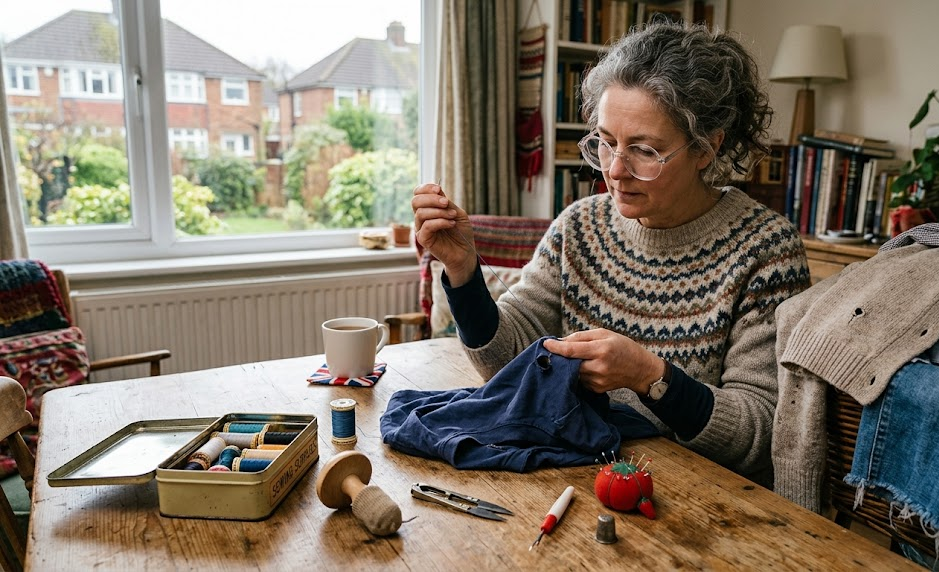
Before you start, gather some important tools.
- A small wooden darning mushroom will help support knitwear.
- Include needles in different sizes and organic cotton threads in some neutral colours.
- Sharp embroidery scissors and a metal thimble will make your work easier.
These basic, natural materials provide everything you must fix most garment problems at home.
Easy Clothes Repair Hacks for Beginners at Home
Here are the ten easy clothes repair hacks for beginners at home:
Fix A Loose Button On Coats
Missing buttons can be a common problem.
- Thread a needle with two strands of cotton thread.
- Pass the needle through the fabric and buttonholes 6 times.
- Wrap the thread around the button’s base to secure it and tie a knot below.
This technique keeps the button in place during everyday use. You can use a different thread colour to add a stylish touch to an old jacket.
According to Fashion Capital, people in the UK completed 413 million clothing repairs, with sewing buttons being a common fix. This small skill helps keep millions of garments out of landfill.
Repair a Snagged Thread Carefully
When you see pulled threads on a jumper, it may look bad, but it’s easy to fix.
- Don’t cut the thread. Instead, turn the garment inside out.
- Use a fine needle to pull the loop through to the back.
- Gently massage the fabric to help the fibres settle.
The knit will go back to its original shape. Acting quickly can prevent a small snag from becoming a big hole.
Fix Moth Holes In Knitwear
Moths often eat high-quality wool. To fix a hole:
- Use a darning mushroom to stretch the area around it slightly.
- Weave your thread across the hole one way.
- Then go back the opposite way.
This makes a soft patch that moves with the fabric. Use a matching wool yarn for a discreet repair or bright silk for a visible, artistic mend.
Mend a Fallen Hem Fast
Hems on trousers and skirts can come loose after frequent washes. To fix them, use a blind stitch to keep the stitches hidden. For a quick solution, hemming tape works as a temporary fix, but hand-sewn hems are more durable and give a tailored look.
Fix A Stuck Or Split Zip
Zips often stop working because they get stuck or misaligned. To fix this, rub the zip teeth with a graphite pencil or beeswax. This will help the slider move more easily.
If the zip has split, use pliers to tighten the slider. These simple fixes can save you the cost of replacing the entire zip.
Strengthen Thinning Denim At Home
Jeans often wear out in the thighs or knees. To prevent a hole:
- Place a sturdy cotton patch behind the thinning area.
- Use a running stitch to attach the patch to the denim.
This method stops rips and can extend the life of your favourite jeans. It’s satisfying to save a pair that fits you well.
Repair A Split Side Seam
Seams can pop at the waist or underarms. Turn the item inside out, follow the original stitch line, and use a strong backstitch to close the gap. Secure the ends with additional stitches to prevent unraveling. This quick task restores the garment’s structural integrity.
Remove Pilling And Jumper Bobbles
Bobbles can make knitwear look worn. Use a fabric comb or a clean razor to remove loose fibres, revitalising your jumpers. Doing this once a season keeps your wardrobe looking fresh.
Patch Small Tears With Interfacing
Small tears in cotton shirts can be hard to fix. To repair them:
- Use a small piece of iron-on interfacing on the inside of the shirt.
- Press it with a warm iron to seal the edges of the tear.
This strengthens the fabric and stops the hole from getting bigger. It’s a nearly invisible way to fix small damage.
Treat Stubborn Stains Naturally
Spills can happen to anyone. Treat stains right away with cold water and lemon juice or salt. Avoid hot water, as it sets protein stains. Blot gently to protect the fabric. These natural methods are safer for your skin and the environment than harsh chemicals.
Conclusion
Keep a simple repair kit handy and dedicate some quiet time to ensure your favourite clothes last. This week, pick one unworn item to repair; just a few stitches can revive it and add a unique story to your wardrobe.For timeless pieces worth repairing and keeping, contact us at Clotho London.

