
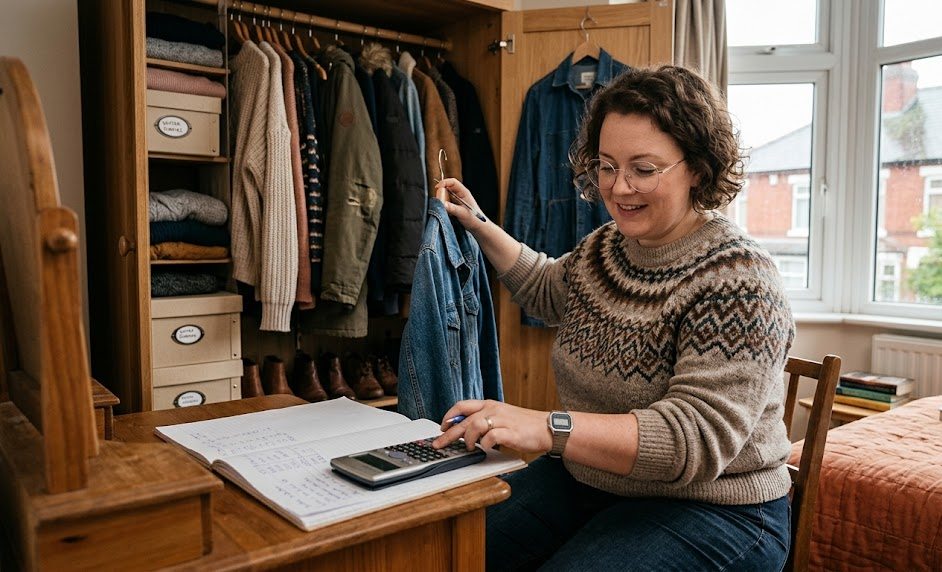
How to Calculate the Cost Per Wear of Your Wardrobe
-Your wardrobe is full, but most mornings you reach for the same handful of outfits. Does this sound familiar? The problem is not usually the clothes you buy; it’s the gap between what you buy and what you actually wear.
A 2026 Waste Direct report found that the average UK person owns 57 unworn clothing items. This represents a substantial amount of idle fabric and lost money in wardrobes.
Calculating cost per wear helps you see this difference clearly. It turns feelings of guilt about spending into valuable data. Once you know which pieces you wear usually and which you rarely touch, you can shop more effectively and dress with less stress.
At Clotho London, we help you craft timeless, sustainable fashion; where classic meets contemporary style.
The Simple Maths Behind the Method
To find out how much an item costs per wear, divide the price by the number of times you have worn it. For example, a £200 item worn 50 times costs £4 per wear. If you only wear the same blazer twice, it ends up costing you £100 per wear.
That higher cost is what hurts. It also explains why a dress bought on sale but never worn can become one of the most expensive items in your closet.
Practical Steps to Audit Your Wardrobe
Here are a few practical steps to audit your wardrobe:
Step 1: Track Wears Without Making It a Chore
You don’t need a spreadsheet to get started. A notes app like Evernote on your phone is enough. Each time you wear an item, write it down. If you want a visual option, try a few wardrobe apps like Save Your Wardrobe or Whering, which make the process easier.
For older items, make an estimate. Think back over the previous year. A frequently worn piece might have been worn about 50 times. A special occasion item could be worn only four to five times. These rough numbers will still show you patterns in your wardrobe.
Step 2: Run the Numbers Across Real Categories
Try applying this method to different parts of your wardrobe to see contrasting results.
A £120 wool coat worn 60 times over two winters costs £2 per wear. This is excellent value for a piece you grab without considering. In contrast, a £40 dress worn twice costs £20 per wear, even though it was cheaper initially.
Work clothes lose value quickly due to frequent wear, often costing less than £10 per wear in one season. Occasion wear remains expensive unless styled differently, while everyday basics such as t-shirts, jeans, and sweaters reach a low cost-per-wear fastest.
For a visual depiction, refer to this guide that shows how to implement the cost per wear calculation for regular items.
Step 3: Know What Good Value Looks Like
Rough benchmarks help you understand costs without overthinking.
Basic items should cost less than £1 per wear if you utilise them for a year. Coats and tailored pieces should be under £5 per wear. Occasion outfits can cost £10 or more, which is fine if the occasion matters. Trainers and shoes can vary in price based on the weather and how much you walk.
These numbers are guides, not rules. A wedding outfit worn once can still hold value. The goal is to identify items that waste money. Look for:
- Shirts with tags still on
- Shoes that hurt
- Trendy buys that quickly go out of style
For sharper benchmarks across categories, then take a look at this guide on the best value for money wardrobe items, ranked by cost per wear.
Style Smarter to Lower Your Numbers
Bringing down the cost per wear of your clothes is often easier than you think.
Change how you style your outfits. That silk blouse you wear for meetings can look great with jeans on weekends. The midi skirt from the christening can be paired with a chunky knit and boots for autumn walks. Versatility is mostly about habit.
Layering allows you to wear summer dresses into November. Adding accessories like belts and scarves can fully change an outfit. Rotating clothes seasonally keeps things fresh; pack away winter knits in spring and rediscover them in October.
According to WRAP, the UK sends about 336,000 tonnes of clothing to landfill in the UK each year, of which around 30% of clothing in wardrobes has not been worn for at least a year. Currently, the average piece of clothing is worn only seven to ten times before being thrown away. The costs, both financial and environmental, are high.
Having smaller wardrobes and wearing what you have more often is a simple solution. If you are unsure on how to get started, check out our guide on how to build a seasonless capsule wardrobe.
Conclusion
Select three pieces of clothing from your wardrobe today: a favourite, something rarely worn, and an item in between. Calculate the cost per wear to see what the numbers reveal about your shopping habits.
Before buying something new, ask yourself one question: “How many times will I wear this?” Your future wardrobe will appreciate it.For tailored guidance on building a wardrobe that lasts, contact us at Clotho London.

