
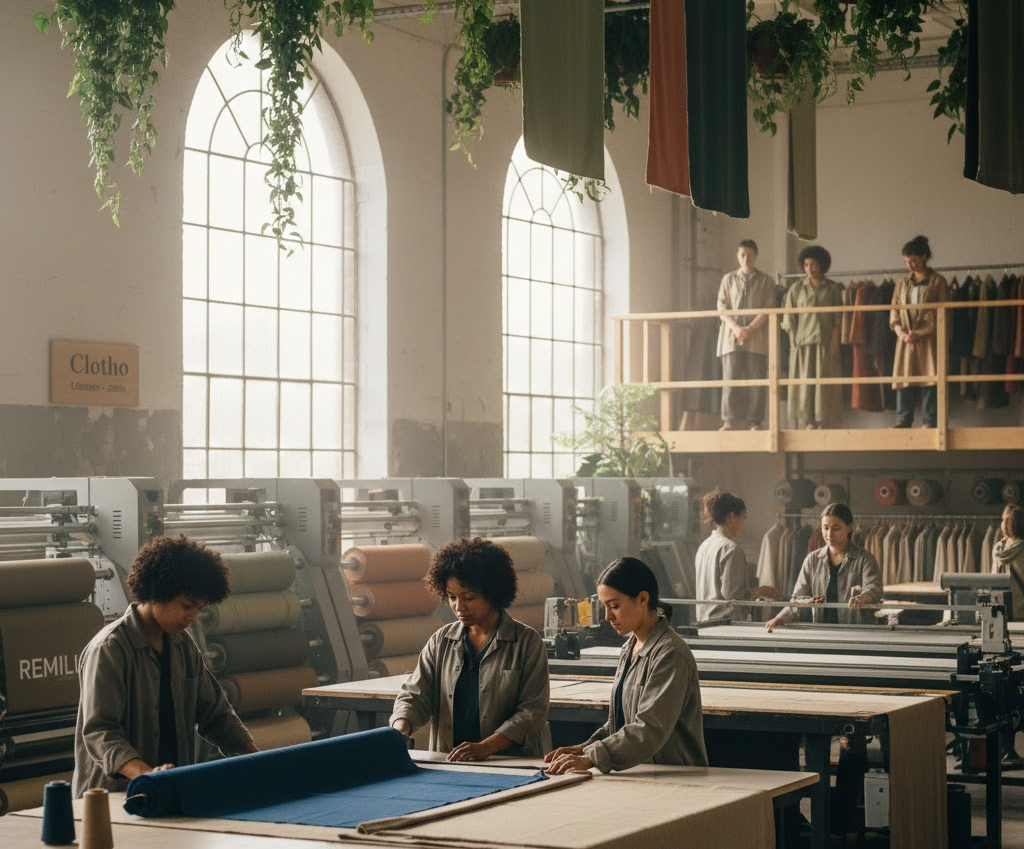
How Are Sustainable Clothes Made
-The feeling of new clothes is improved when you know the item was made with respect for the earth and the people who crafted it.
For many years, the fashion industry followed a linear model: taking resources, making products, and even creating waste. Now, we see a positive shift toward a circular model, where every step is planned and purposeful.
In 2024, the UK government invested £6 million into circular fashion to help regional hubs develop cleaner production technologies.
By 2026, this investment began to yield results, making eco-friendly production methods more available to independent British designers. This progress is crucial because it shows that fashion can be high-quality and low-impact.
At Clotho London, we help you craft timeless, sustainable fashion; where classic meets contemporary style.
This guide will show you how an ethical garment comes to life.
Practical Steps to Make Clothes Sustainable
Here are some practical steps to make clothes sustainable:
-
Source Fibres with a Future
Sustainable garments start from healthy soil or advanced labs, not from high-intensity farms. Traditional cotton farming uses a lot of water and pesticides.
To change this, sustainable brands are shifting to regenerative farming, which improves soil health while growing crops such as organic cotton, hemp, and flax.
We are also seeing new materials made from surprising sources, such as seaweed, mycelium, and orange peels. These materials need much less land and water than animal-based or synthetic options.
By using these innovative materials, brands ensure their clothes are biodegradable and free of plastic microfibers found in polyester.
-
Transform Raw Materials into Yarn
After harvesting the fibres, the next step is to make yarn. Traditional methods often use harmful chemicals at this stage. In contrast, sustainable production uses closed-loop systems. For example, Lyocell and Tencel are made from wood pulp and use a process that recycles 99% of the water and solvents.
Understanding how are sustainable clothes made starts at the processing stage, where non-toxic methods ensure that no harmful chemicals leak into our waterways. These systems aim to be self-sustaining. Instead of releasing chemical waste into rivers, factories capture and reuse their resources repeatedly. This approach protects local biodiversity and creates a safer workplace for those handling the materials.
-
Dye without the Damage
Dyeing is one of the most polluting parts of fashion. Traditional synthetic dyes contain heavy metals that can damage aquatic life. Ethical brands are now using plant-based pigments and natural dyeing methods. These new techniques use natural extracts from roots, berries, and even food waste to create beautiful, lasting colours.
New dyeing machines in the UK factories now use up to 30% less water than older ones. They use air and foam to apply colour to the fabric, eliminating the need for large pots of boiling water. This change dramatically reduces the energy needed to heat the water. It ensures that the final garment is safe for even the most sensitive skin.
For clearer insight into how these clean processes protect our waterways, take a look at this practical guide that helps consumers identify non-toxic colouring methods.
-
Weave and Knit for Quality
The way a fabric is made affects how long it lasts in your wardrobe. Sustainable fashion values durability over quick production. There is a growing revival of traditional textile mills in places like Yorkshire and Scotland. These mills often use slow-speed looms and dense knitting techniques to create much stronger fabric than what you discover in fast-fashion stores.
High-density knits are less likely to lose their shape after washing. This slow method of weaving means the machines are not pushed too hard, leading to fewer mistakes and less waste. When a fabric is made with such care, it is intended to be passed down through generations instead of thrown away after one season.
-
Eliminate Waste During the Cut and Sew Stage
When designers create patterns for shirts or trousers, they waste around 15-20% of the fabric as scraps. Sustainable brands are addressing this zero-waste pattern cutting. This method allows every piece of the pattern to fit together like a jigsaw puzzle, leaving no waste behind.
UK workshops now use 3D sampling software. This lets designers see how a garment fits on a digital avatar before cutting any fabric. It removes the need for multiple physical samples, saving fabric and reducing carbon emissions from shipping.
The human factor is also essential here. Ethical workshops pay fair wages and create a safe, creative environment for skilled tailors who bring the designs to life.
-
Finish with Care and Responsibility
The final “finishing” of a garment often involves chemical softeners or harsh treatments such as sandblasting for denim. Sustainable clothing uses ozone technology or natural enzymes instead. Ozone machines use gas to soften fabrics or create a “distressed” look without the water or toxic bleach.
Finishings also cover small details like buttons and zippers. Ethical brands often choose buttons made from nuts (corozo), recycled paper, or even discarded seashells. These choices make sure that every part of the garment is as responsible as the main fabric. This attention to detail is what sets ethical manufacturing apart from mass production.
-
Deliver Responsibly with Green Packaging and British Shipping
The journey doesn’t end at the sewing machine. The way a garment is delivered to you is also essential. Sustainable brands have stopped using plastic handbags and now use biodegradable paper or reusable fabric pouches. In Britain, many ethical companies opt for carbon-neutral shipping partners or even use electric vans for deliveries in cities like London.
They minimise packaging to reduce bulk. Using recycled cardboard and water-based inks means their boxes can also be composted or recycled at home. This final step completes the process, keeping everything from farm to front door as clean as possible.
Conclusion
Every sustainable garment has a purpose and represents new ideas. From farms that improve soil to workshops that create with no waste, making clothes is changing for the better.
When you support these methods, you are not just buying clothes; you are helping to create a cleaner planet and a fairer fashion industry.
As you visit local boutiques and ethical brands in the UK, take a moment to appreciate the skill involved in creating each piece. This journey shows that looking good and doing good can go hand in hand.
If you are interested in how businesses are adopting these ethical standards, then take a look at our practical guide for understanding how a clothing brand can be sustainable in the current market.

